NEW EDGE AI
Product Design
Branding
〰️
Product Design
〰️
System Design
〰️
Branding 〰️ Product Design 〰️ System Design 〰️
New Edge AI is an agent-orchestration platform for B2B commerce, a space where buying is notoriously slow, manual, and relationship-heavy. Its AI agents work across the entire funnel, acquiring and onboarding customers, building quotes, extending credit, negotiating bulk pricing, all inside a single chat experience powered by a client's own data. It's a technical, trust-sensitive product that touches a lot of different surfaces. The brand system made all of that feel like one credible company. This deck is about what I built underneath it.
As founding designer, I came in early enough that the product was still just a backend and a wireframe. Since then I've worked alongside the founders and developers through every version of this thing, close enough to the architecture to shape it, not just skin it. What follows is that story, the parts that worked, the parts that didn't, and what I'm building now.
FOUNDATION
Where It Started
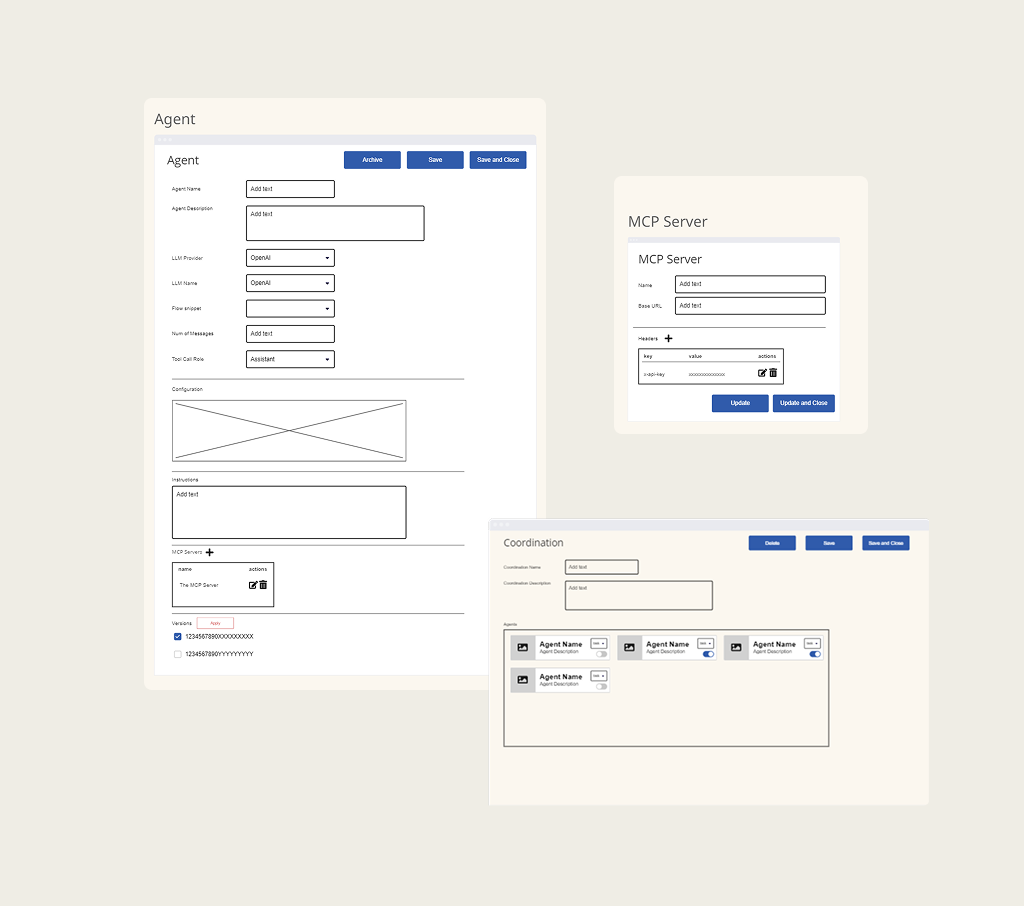
Backend Framework
I started with just a backend and a knowledge graph with no interface yet. My job was to design the experience the architecture hadn't imagined fully.
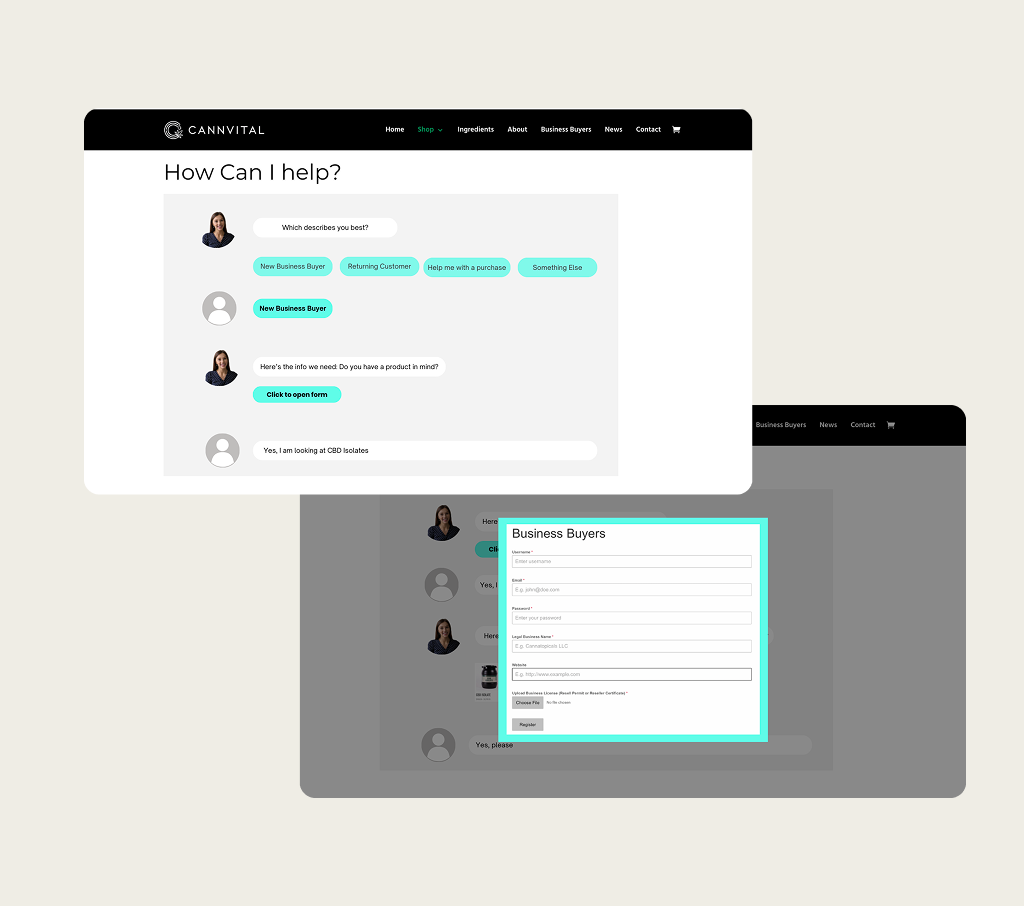
Simplified Chat
The first version was a single chat window with one job, answer questions. It worked, but it was the bare minimum of what this product could become.
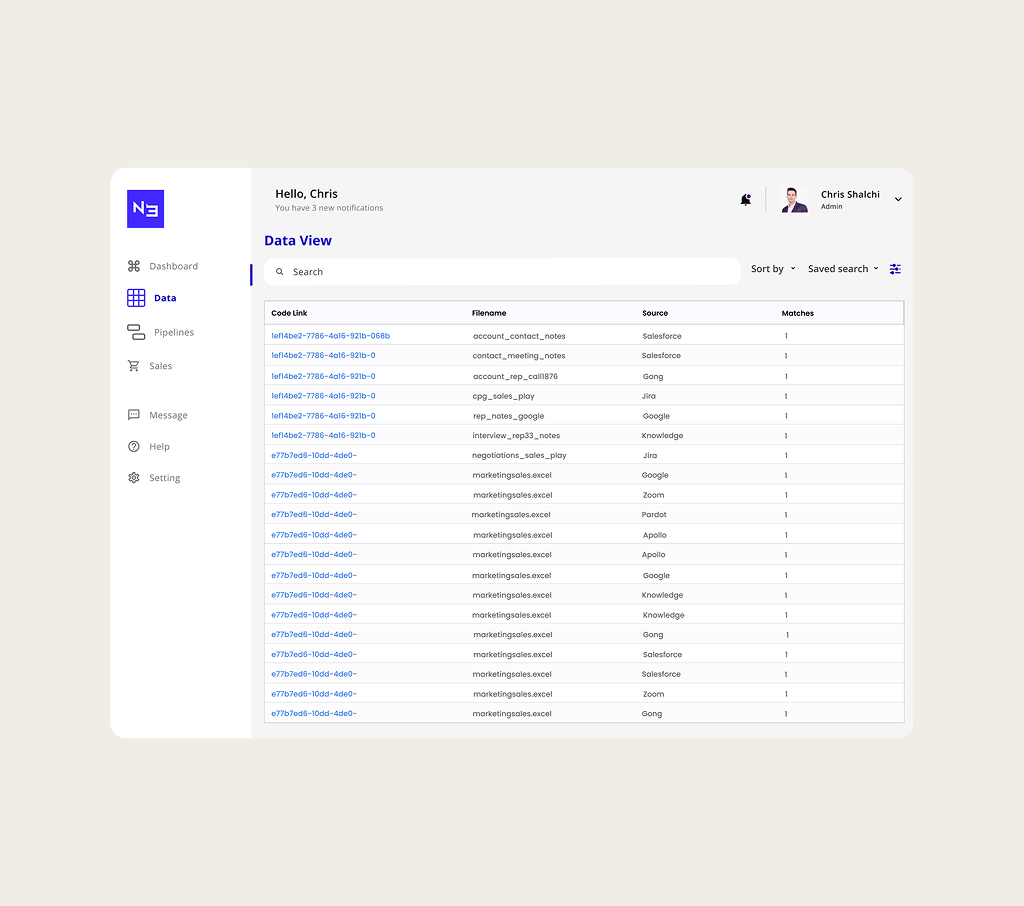
Poor UX
No theming, no structure, no sense of who was talking. It functioned, but it didn't yet feel like a product anyone would trust.
FOUNDATION
The First Pilot
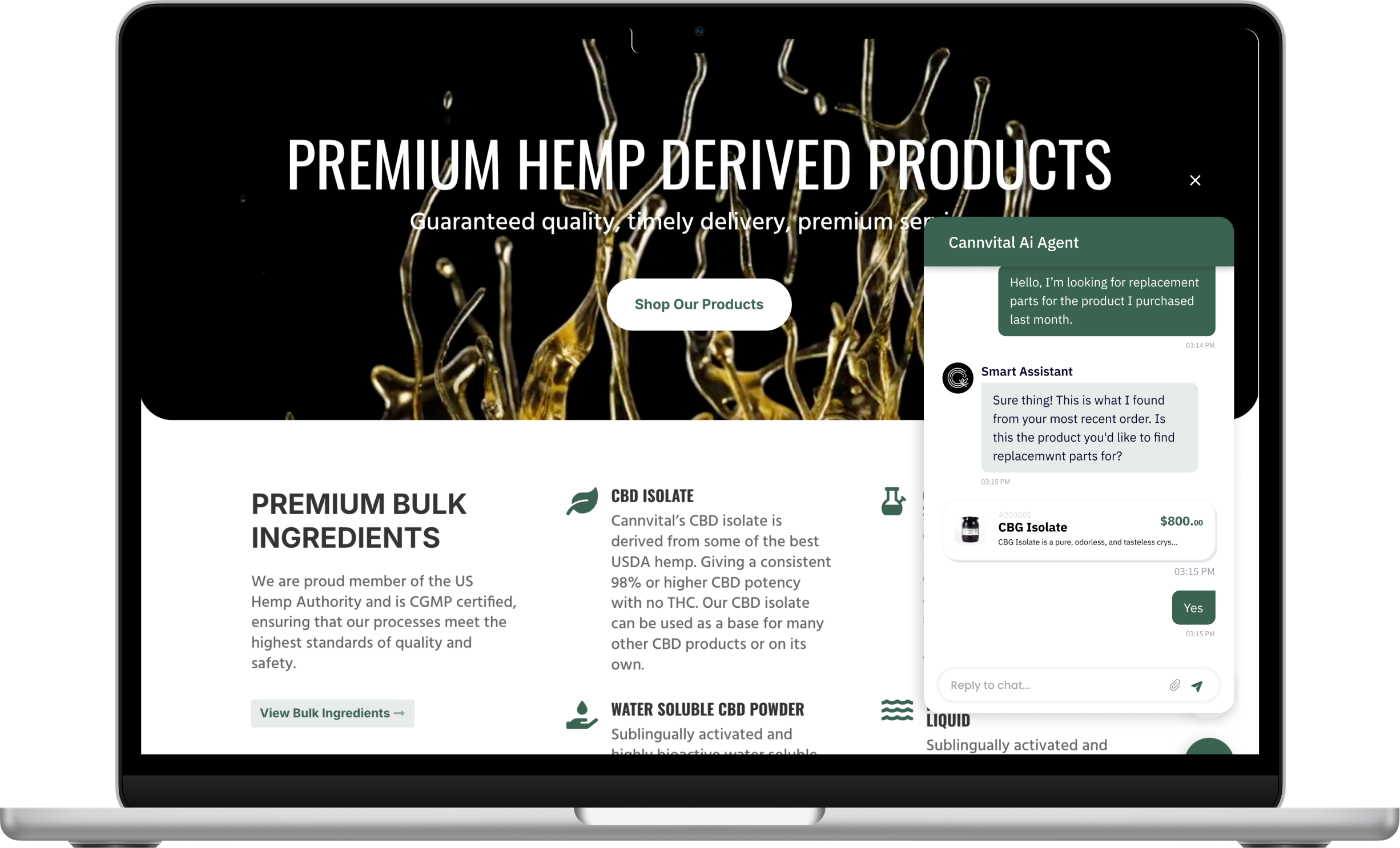
We brought on a pilot partner to test the chat on real wholesaler onboarding and scheduling. This was our proving ground, onboarding flows and appointment scheduling for real wholesalers. It worked well enough to be useful, and not well enough to be the answer. That gap is what pushed the next phase forward.
The Opportunity
We saw an opening, Shopify's massive merchant ecosystem and a component library already built for commerce. Building inside it meant we could move fast without reinventing what already worked. That speed mattered, this was our chance to go from pilot thinking to something closer to a real, launchable product.
Building the shared language
GROWTH
Page by page, I started giving this product one voice. Same patterns, same logic, same feel, whether you were looking at a quote, a product card, or a chat bubble. Working inside Shopify's component library meant adapting their patterns to feel like ours, not just dropping our content into theirs.
Most chat bots only know how to talk. I wanted this one to know how to ask, show, and collect, so I built a library of UI Blocks the agent could reach for depending on what the moment needed. Some answers are better as a form, a multiple choice question, a document upload, a scheduler, a row of product cards to choose from. Each one exists because plain text would have made that moment worse, not easier. Clients noticed immediately, this didn't feel like the chat bots they'd already tried and abandoned. It felt knowledgeable, available around the clock, and like it actually understood what it was being asked.
UI Blocks
GROWTH
The Chat Experience
GROWTH
The chat doesn't start when someone types, it starts before they do. An intro banner sets context the moment the window opens, and a first agent message is already there waiting, not generated on demand. Whether the chat lives in a corner of a site or takes up its own full page, those first beats do the same job. Predefined where it counts, generated where it matters. That first message is one of the few places I held the line on speed, no one should wait for an AI to introduce itself.
Workflows
GROWTH
Workflows are where the agents actually come to life, every step, branch, and trigger sits here. I designed the editor in two layers, a main flow you can scan in seconds, and sub-workflows underneath for the moments that need more detail, so the system stays scannable instead of overwhelming. Each step type got its own icon for at-a-glance reading, and I built a shared vocabulary with the engineering team so we'd all describe the same things the same way, no more three different names for one component.
GROWTH
The Full Picture
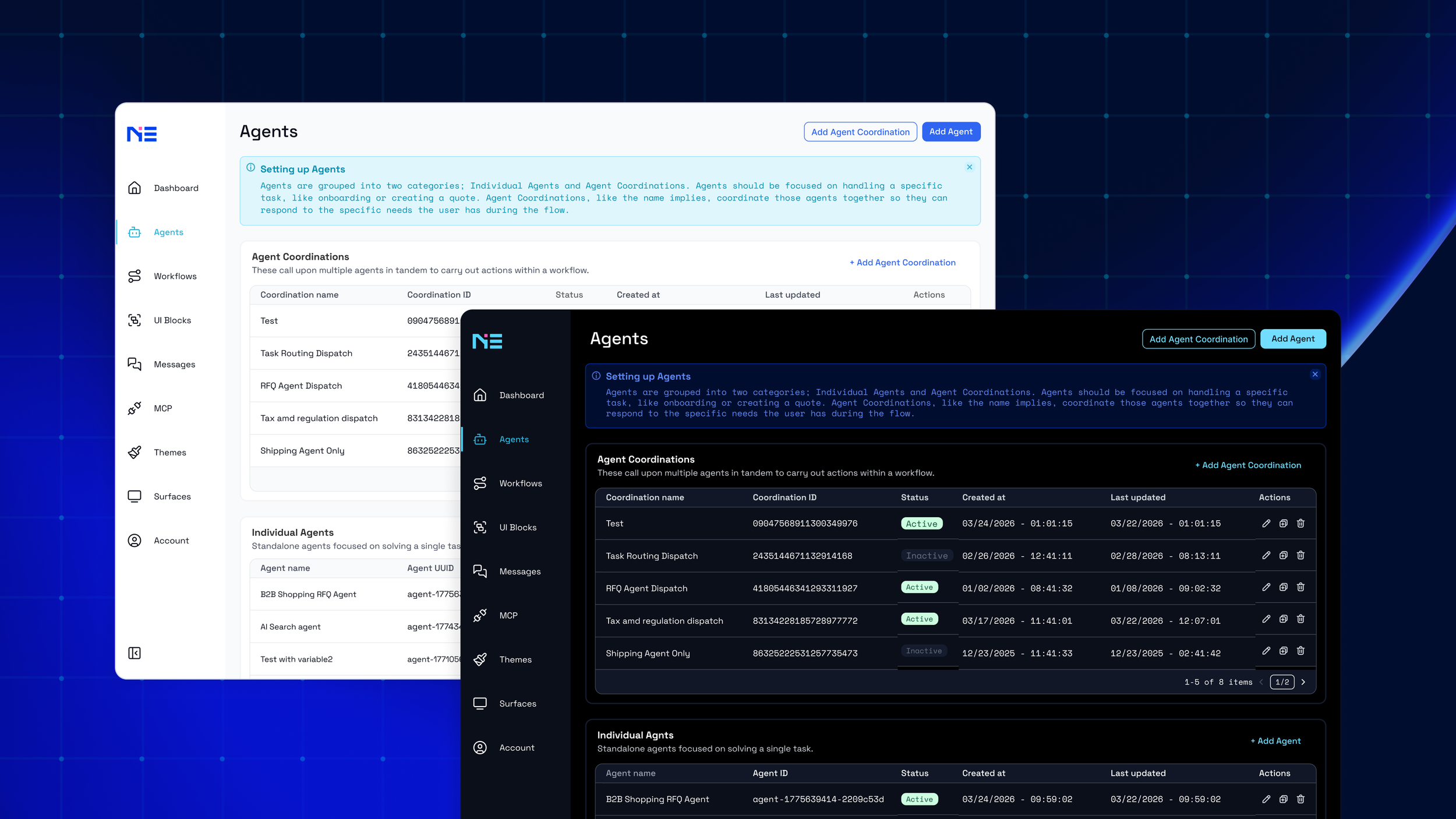
Zooming out, his is the full product: Dashboard, Agents, Workflows, UI Blocks, Message Logs, MCP Connectors, Themes, Surfaces, and Settings. Nine sections, each one owning a specific job, together covering everything from configuring an agent to deploying it, monitoring it, and refining it in place. The design system underneath is what makes them feel like one product, consistent patterns, shared vocabulary, and a component library that scales with every new page we add.
THE PIVOT
A Change
of Direction
Sometimes the right call is the hard one. We were nearly ready to launch inside Shopify when the CEO decided the ecosystem wasn't the right fit anymore. Its merchants weren't the ones this product was really built to serve. We stepped away and started designing for the customers we actually wanted, manufacturing, distribution, wholesale, anywhere a chat agent could carry real weight.
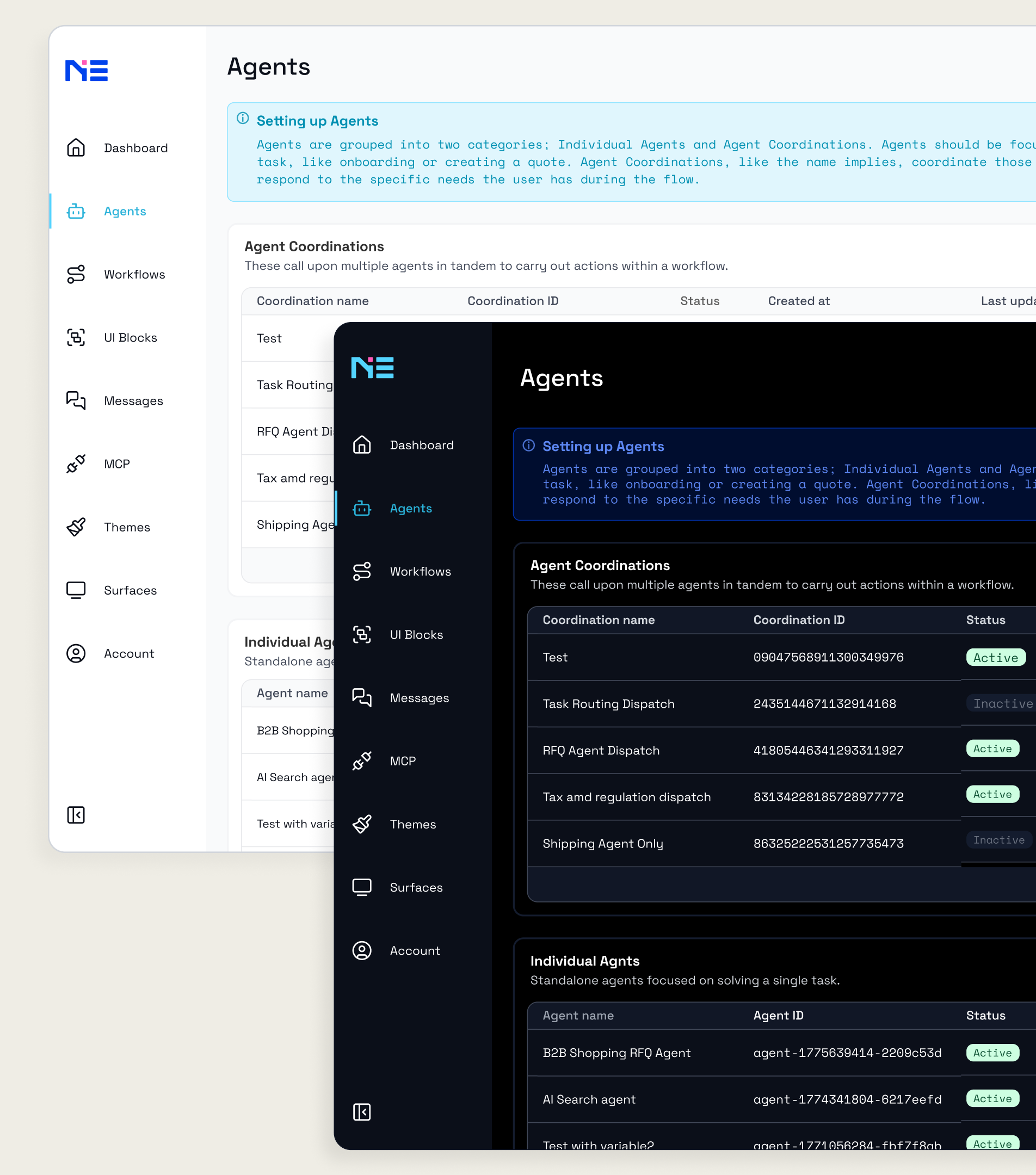
The pivot wasn't a step back, it was a step into the product we actually wanted to build. Freed from Shopify's component library, the design could finally feel like the brand, not a translation of it. And freed from Shopify's architecture, we could split the backend the way it needed to be split, one Internal surface for our team to manage the technical, sensitive setup for every client, one External surface where clients only see what they need to run their agents. Cleaner for us. Simpler for them.
What’s ahead
The Standalone App
Right now, I'm designing the dashboard, the first page of the standalone app in its own visual language, on our own terms. Every hard problem behind it has already been solved once, the components, the theming, the workflow architecture, the shared vocabulary. This next chapter is less about invention and more about bringing everything I've built into a home that fits.
The IMPACT
The most durable thing I built at New Edge AI isn't any single screen. It's the system underneath. A component library that scales, a two-layer workflow editor and shared vocabulary that keeps engineering and design aligned, an Internal/External backend split that separates what clients see from what they shouldn't have to. Neither pilot is currently live, both are getting the data-handling maturity a B2B commerce product needs before it earns its place. What's next is that same system, deployed for manufacturing, distribution, and wholesale companies, the customers this product was actually built for.